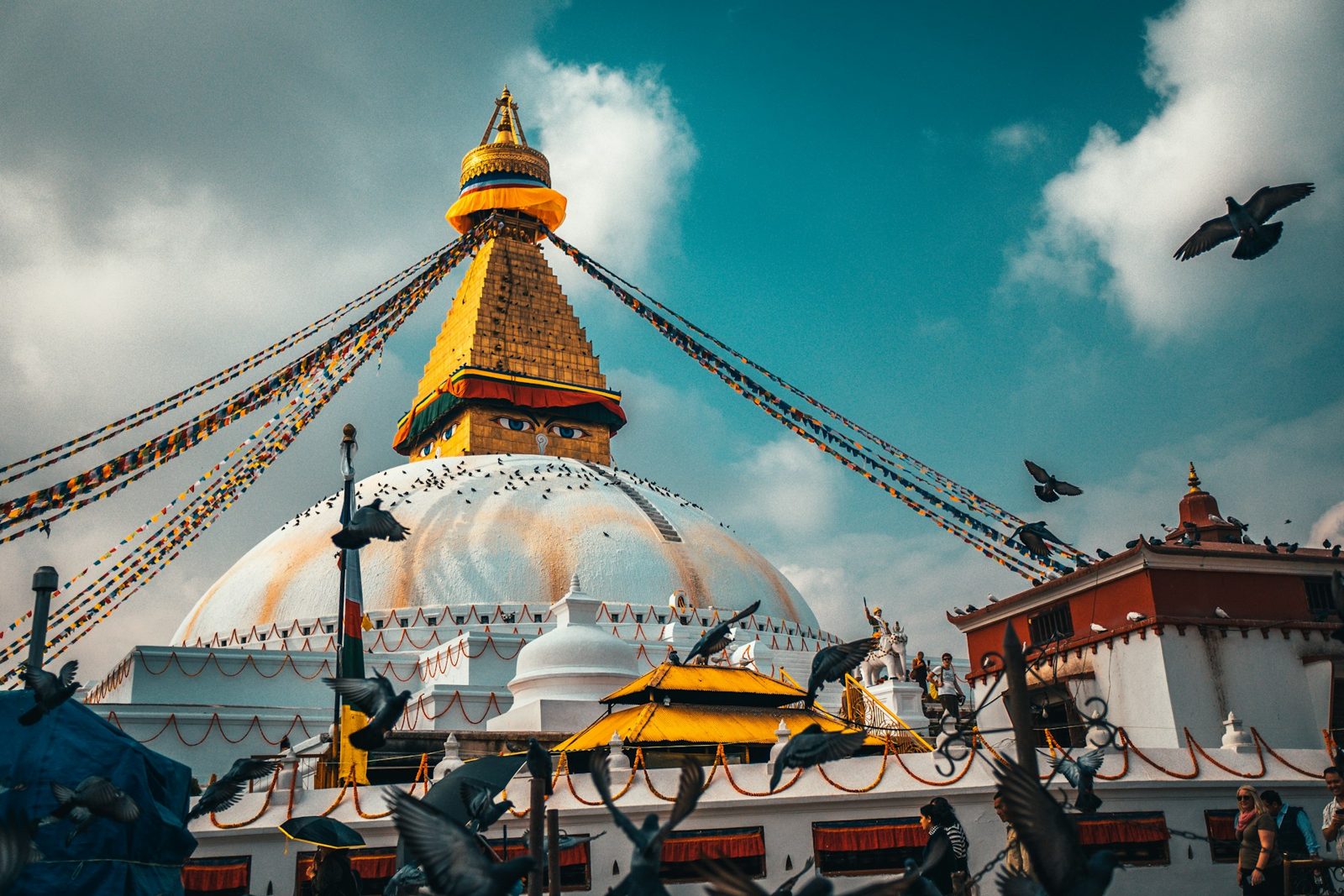
 UNESCO-listed · Kathmandu Valley
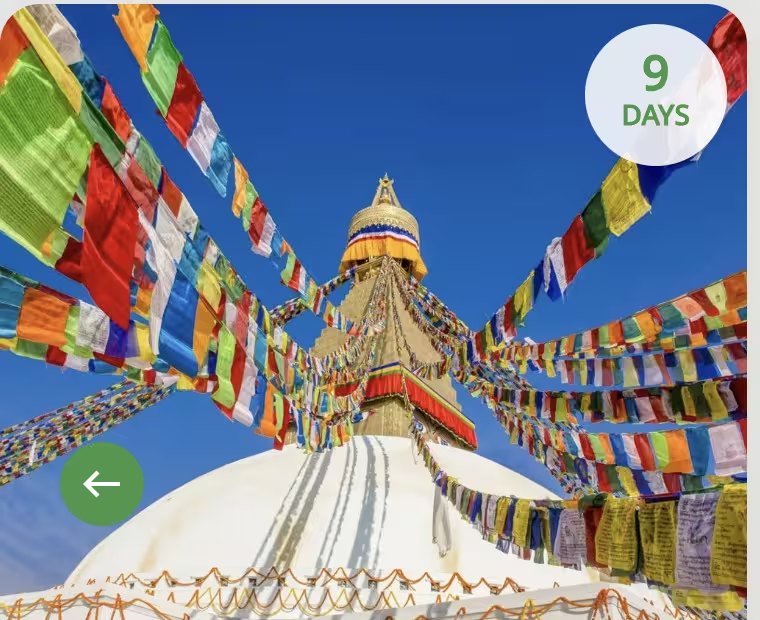
Boudhanath Stupa
The great white dome of Boudha, where the circle of prayer wheels never stops turning.
See this place →

Seven World Heritage Sites in one valley — and the mountain capital of the world.
UNESCO-listed · Kathmandu ValleyThe great white dome of Boudha, where the circle of prayer wheels never stops turning.
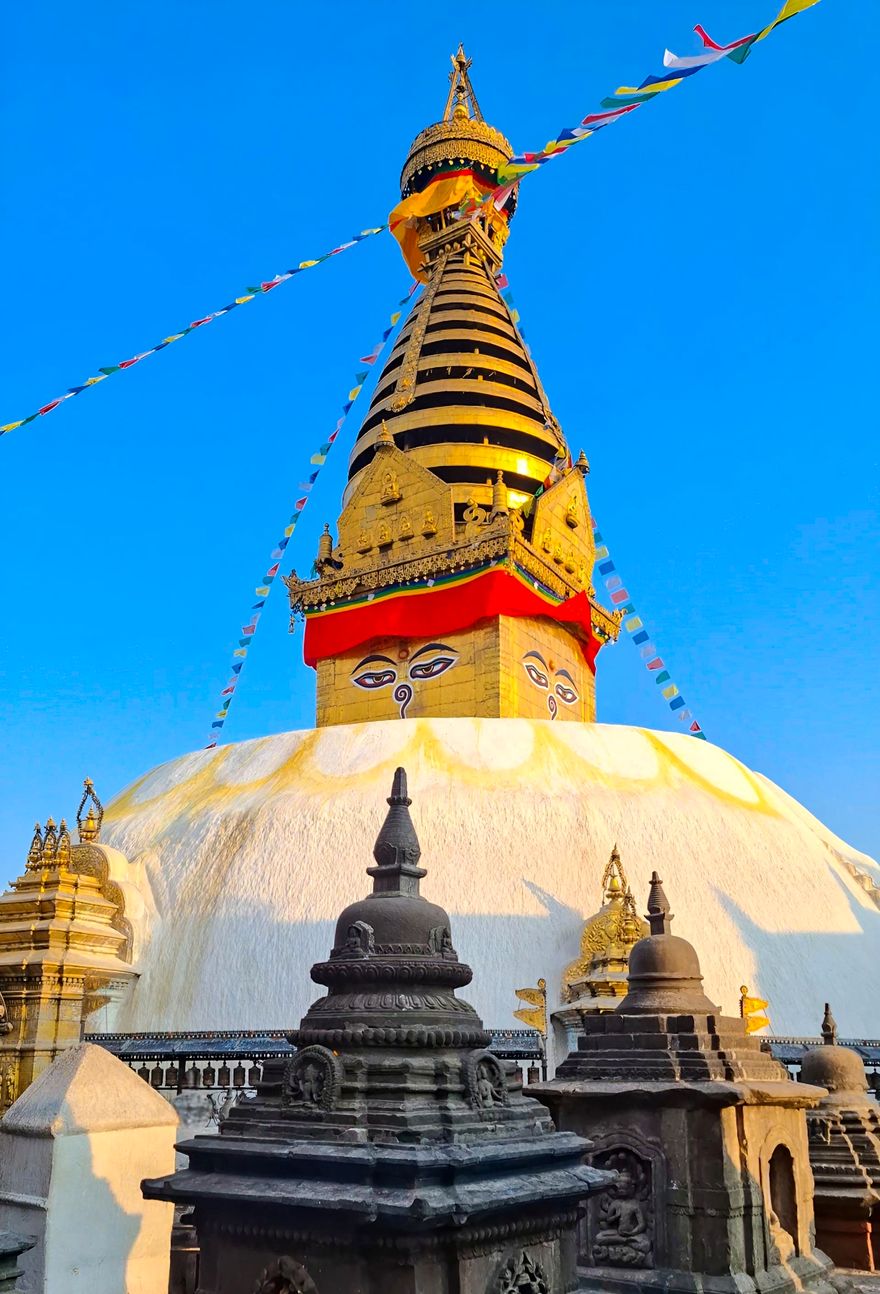
See this place →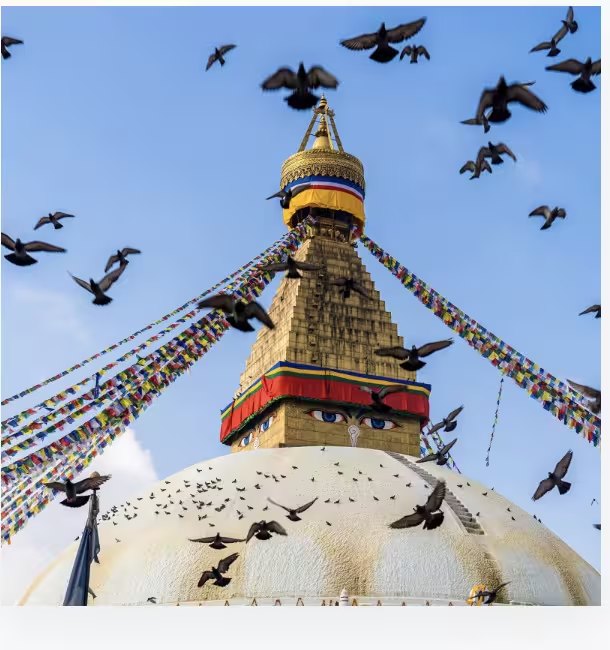 Hilltop stupa
The self-born stupa on the hill, with the whole Kathmandu Valley laid out below it.
See this place →Basantapur’s temple square — the old royal plaza of the Malla kings, still a working city square.
See this place →The trading square of old Kathmandu — spice pyramids, brass, baskets and the noisiest, best hour of the day.
See this place →Two valley cities of brick courtyards, woodcarving windows and cranes over the rooftops.
See this place →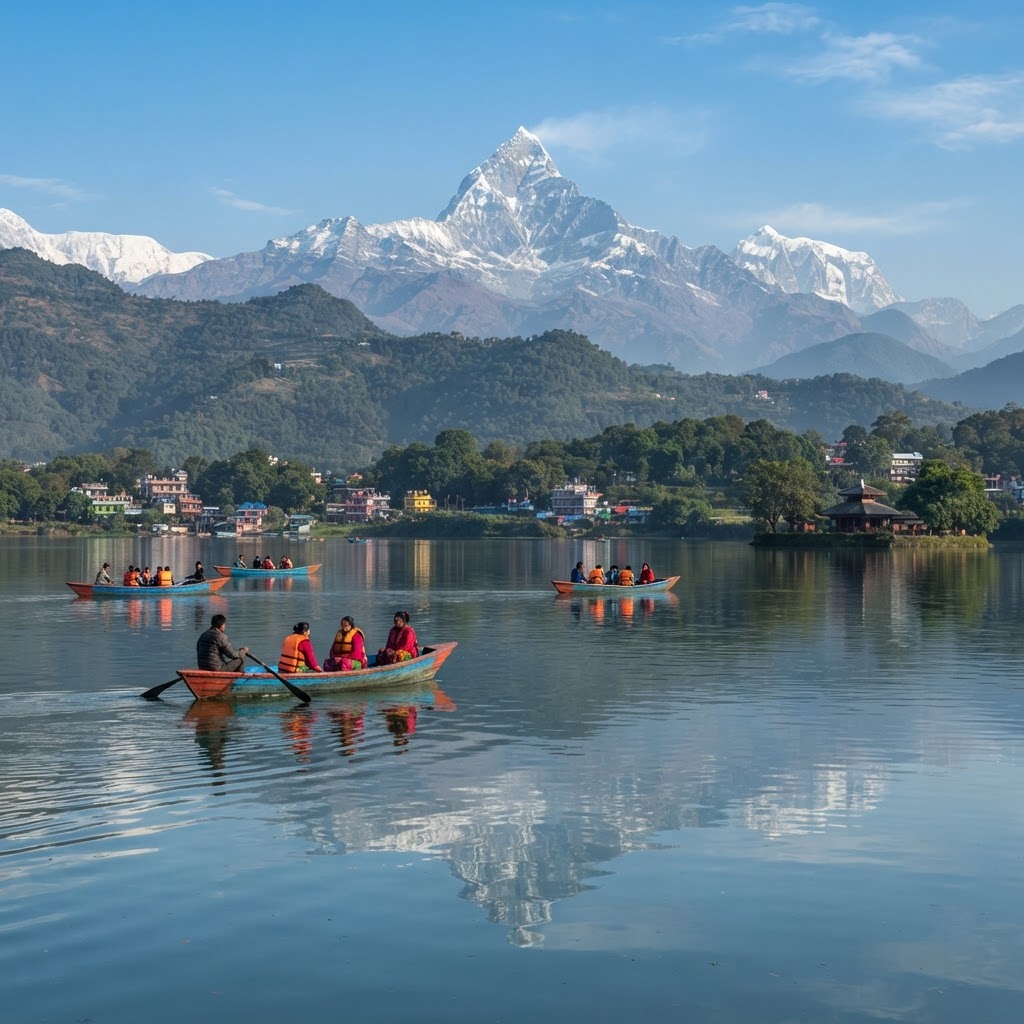 Gateway valley
The lake town under the Annapurnas — boating at dawn, paragliders in the afternoon, mountains when the clouds lift.
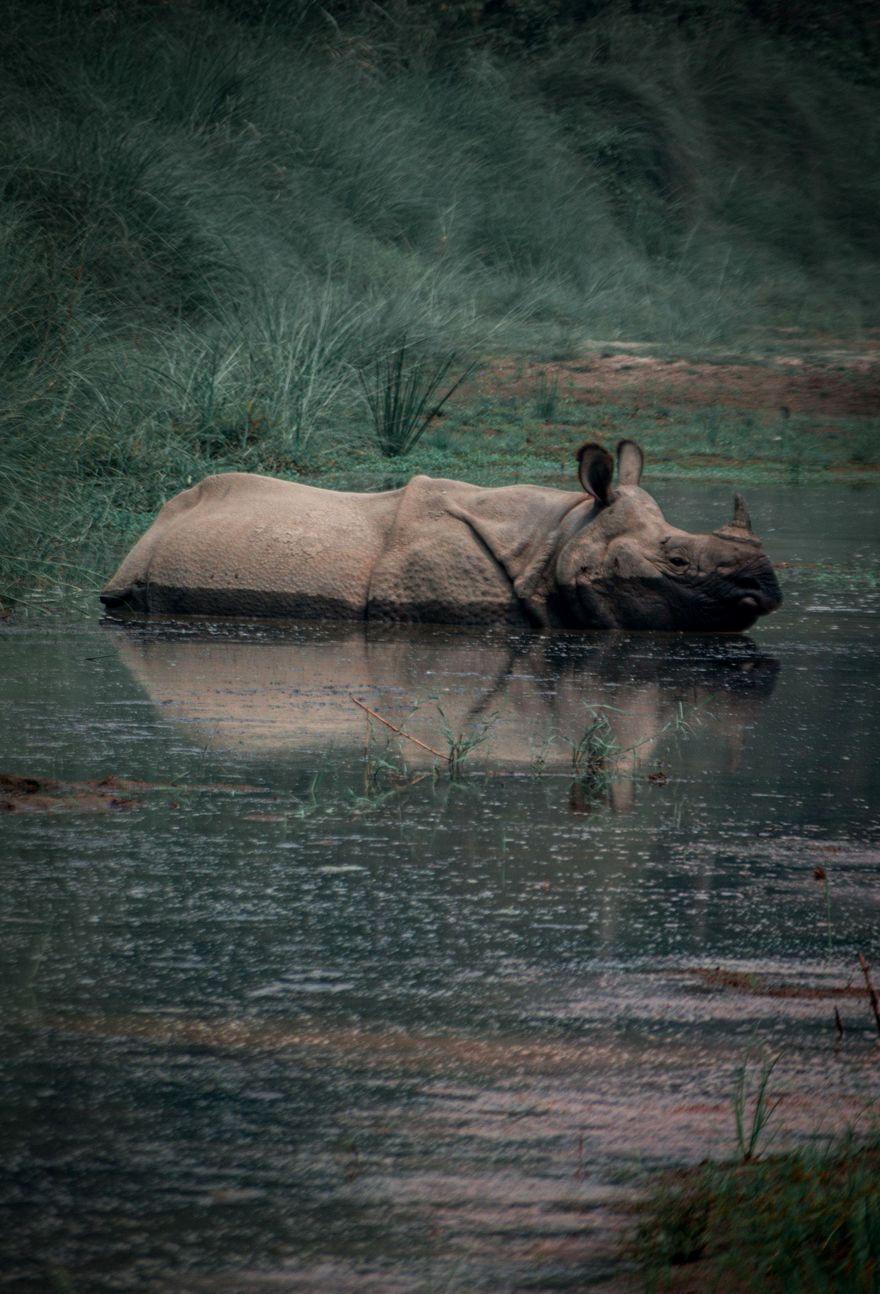
See this place → UNESCO-listed · Wildlife
Sal forest, oxbow lakes and grassland on the Terai — one-horned rhino, crocodiles and, if you are lucky, a leopard.
See this place →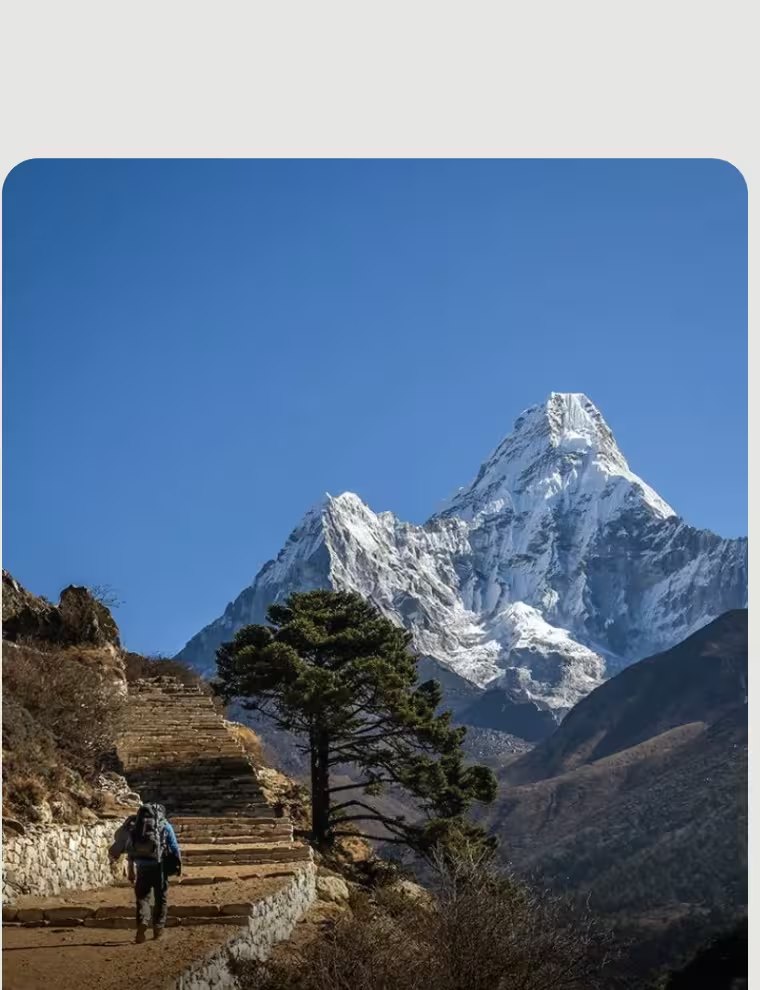 Sunrise viewpoint
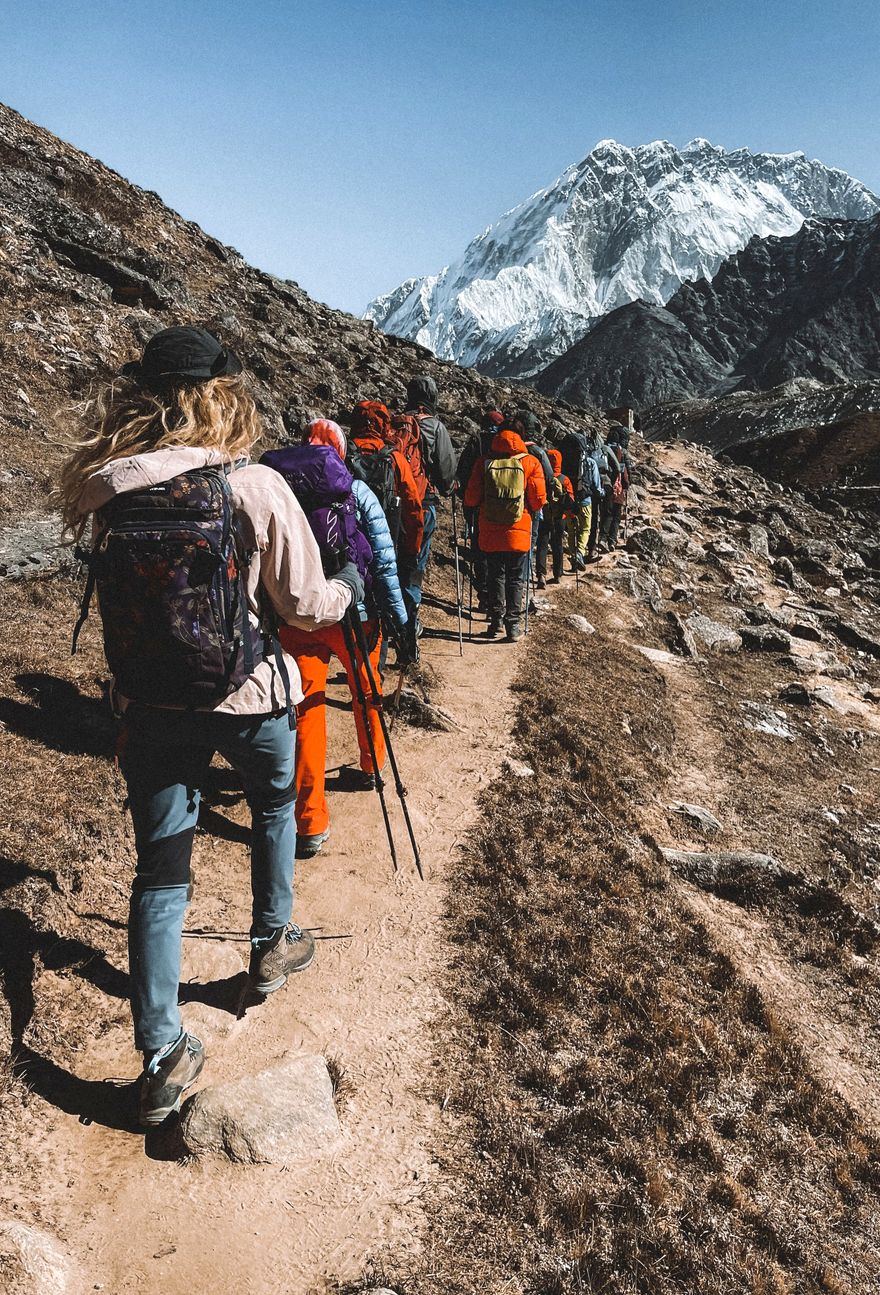
The valley’s roof — the range from Everest to Langtang in one line, above a sea of morning cloud.
See this place →Palace-monasteries, turquoise lakes and the axis-of-the-world pilgrimage of Kailash.
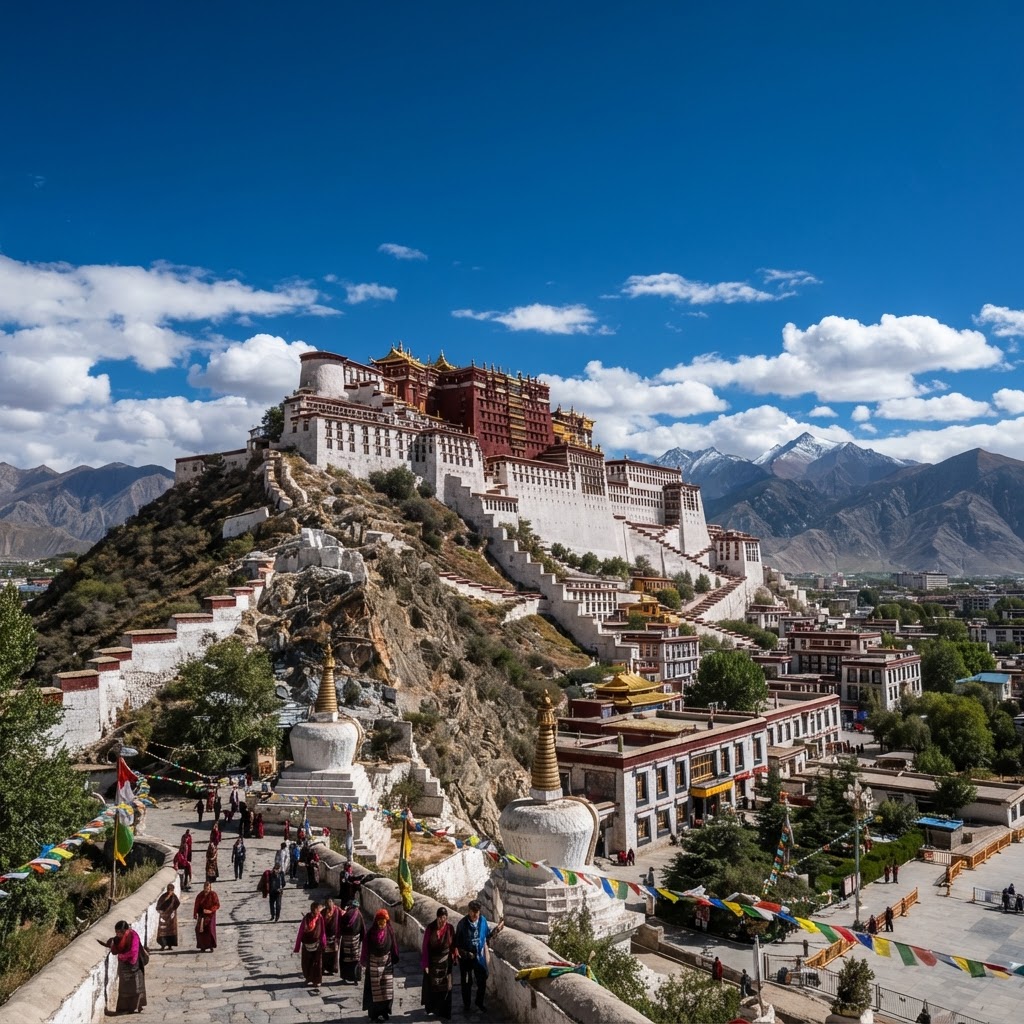 UNESCO-listed · Lhasa
The winter palace of the Dalai Lamas, stacked against the Marpori hill and visible from most of Lhasa.
See this place →Lhasa’s spiritual centre, and the pilgrim round that has walked around it for 1,300 years.
See this place → Sacred lake
The sky lake — turquoise water under the Nyenchen Tanglha range, and nothing else in sight.
See this place → 5,200 m base
The north side of Everest — monastery, flag-squares and the Rongbuk glacier with the peak behind them.
See this place →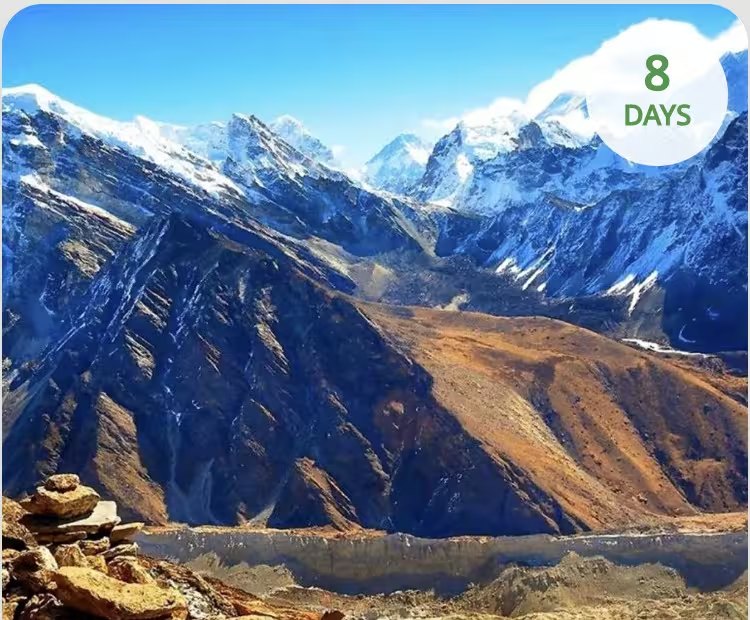 Monastery city
The Tsang capital, and the giant seated Buddha of Tashilhunpo behind the town walls.
See this place →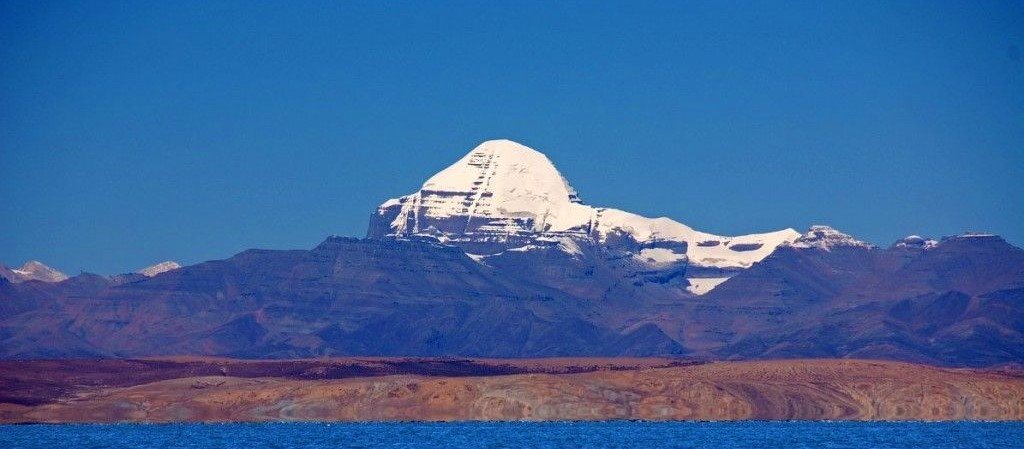 Pilgrimage
Sacred to four religions and to no tourism at all: the mountain, the lake, and the three-day walk between them.
See this place →Dzongs on ridgelines, hanging monasteries and a valley of wintering cranes.
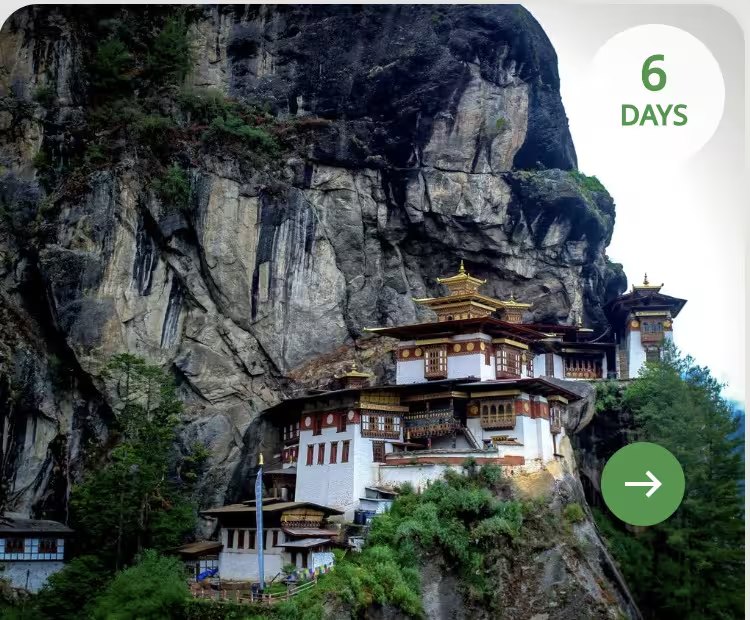 Icon of Bhutan
Eight hundred metres above the valley floor, on a granite wall — the most photographed temple in the Himalaya.
See this place →The valley that receives you: Bhutan’s only airport, an ancient temple in a field, and a town of shakha and red-choo walls.
See this place →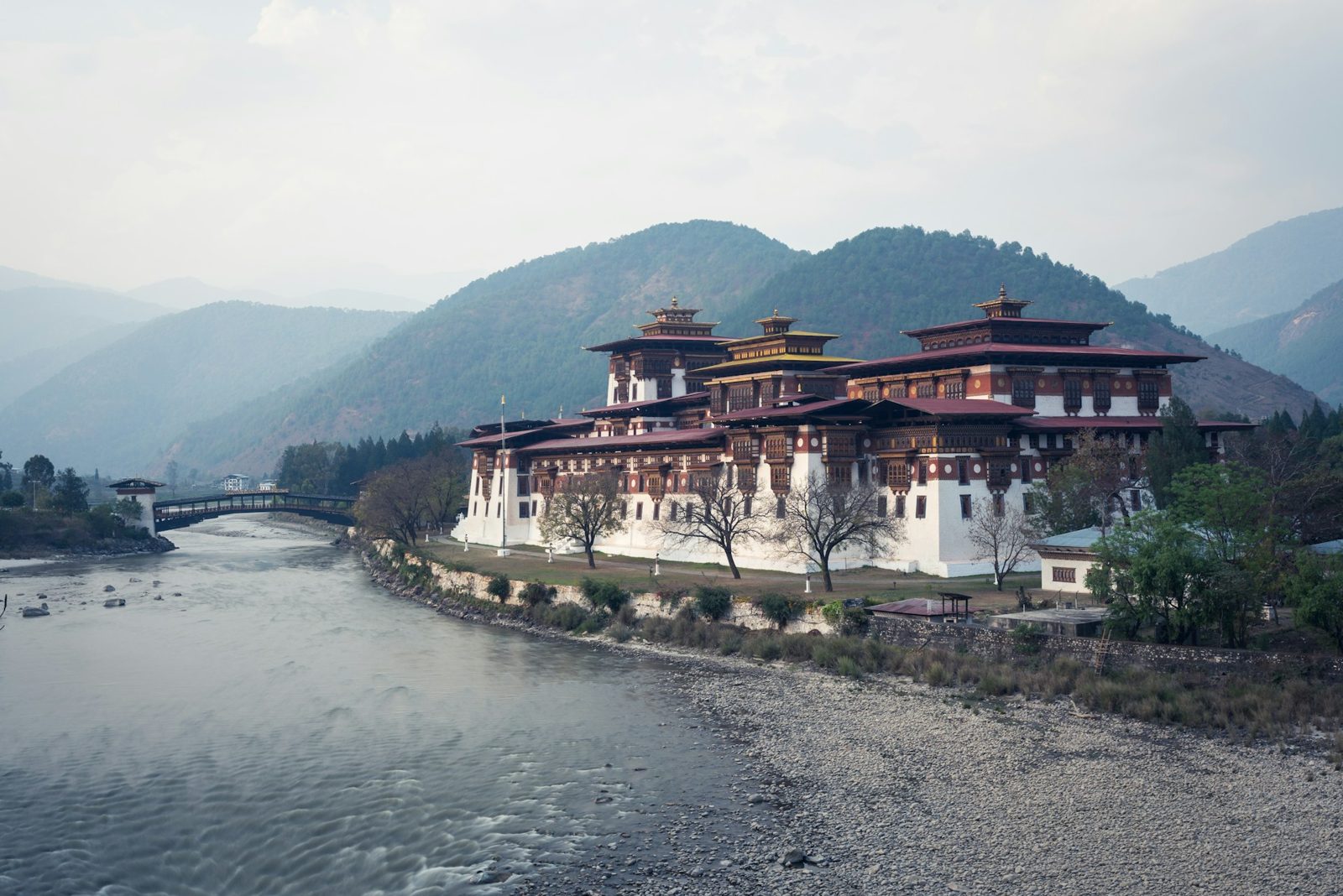 Winter capital
Bhutan’s most beautiful dzong, built between two rivers, and warm when Thimphu is frosted.
See this place → 108 stupas
A ring of 108 white chortens at 3,100 m, with the black mountains of the Himalaya behind them.
See this place →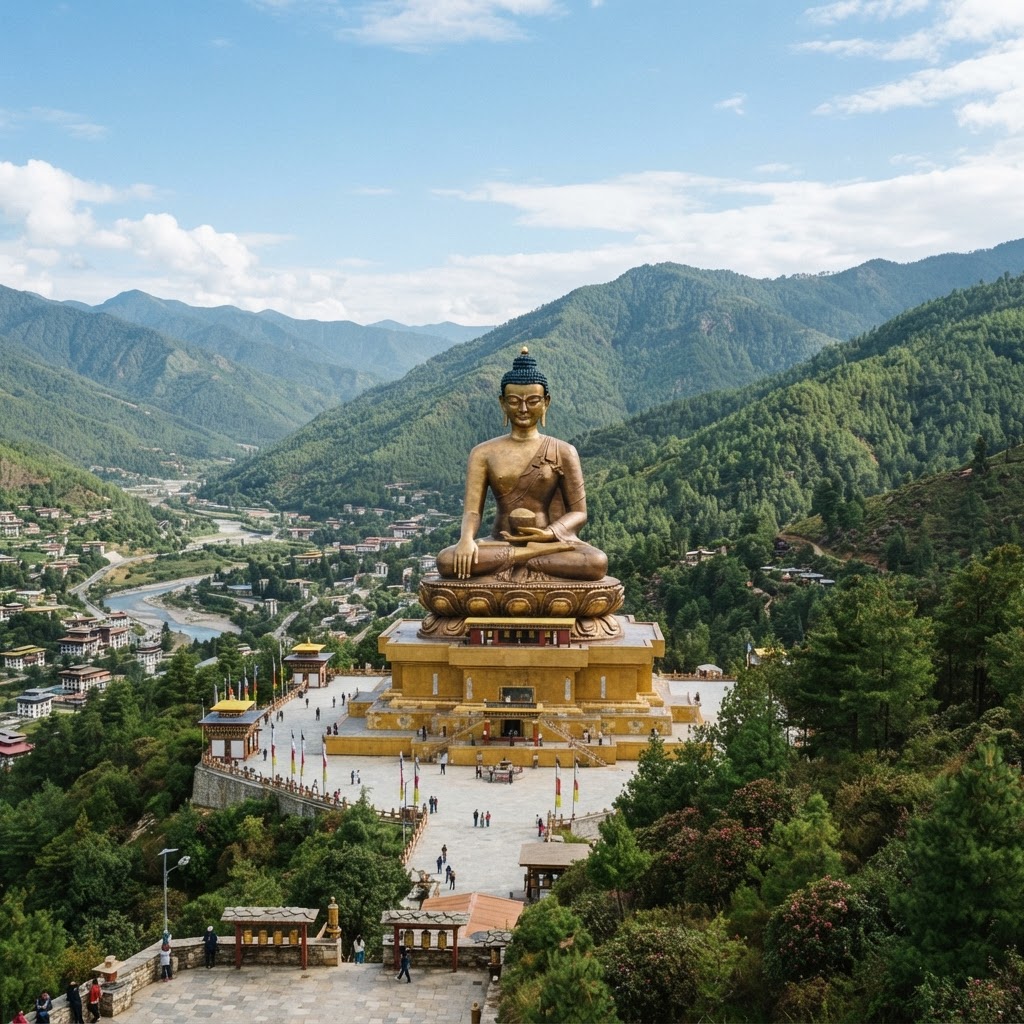 Capital of Bhutan
The world’s least capital-like capital: no traffic lights, one main street, and a 51 m Buddha over the roof-tops.
See this place →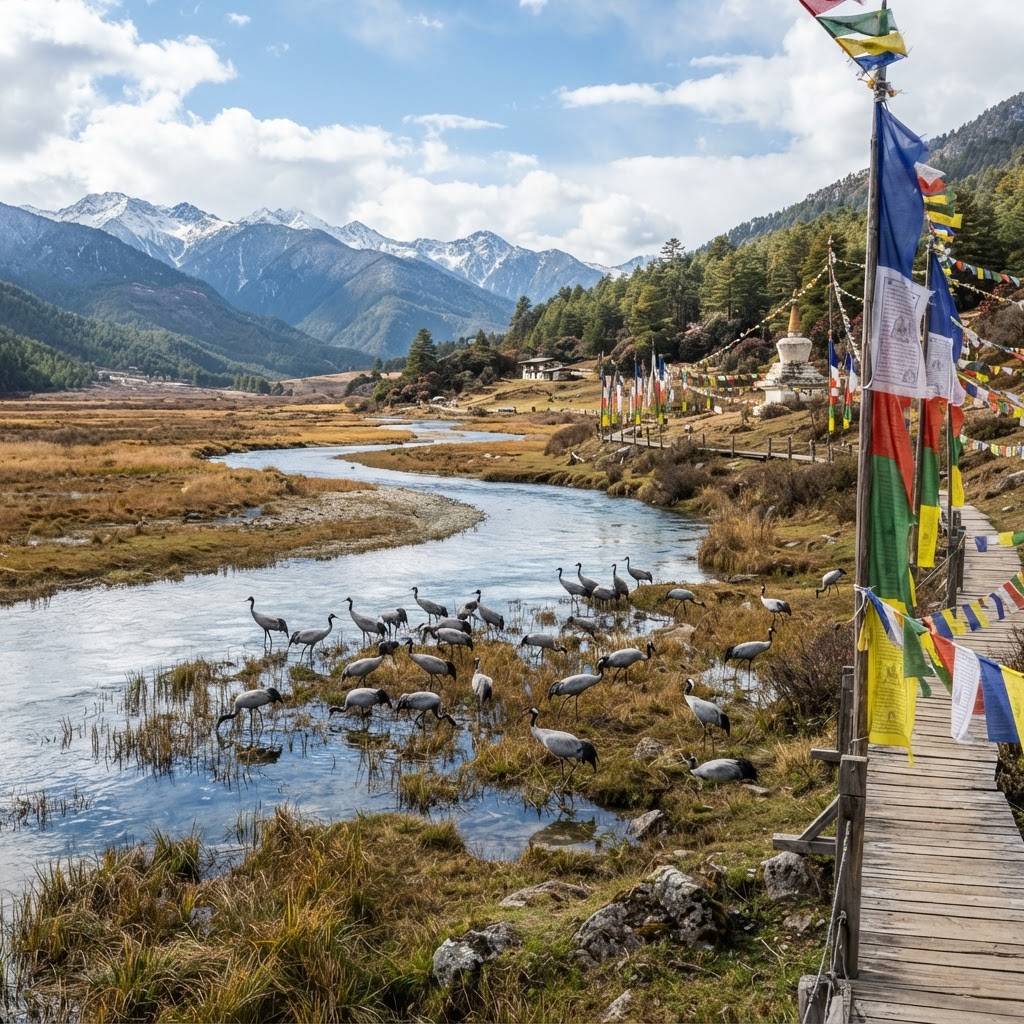 Black-necked crane sanctuary
A glacial bowl of pasture and bog, where the black-necked cranes spend the winter under the ridge.
See this place →A single great nest monastery on a spur above the crane valley, with a village grown against its walls.
See this place →